Flexible Working Hours and 4-Day Workweek Legally Permitted Under New Labour Law

New Delhi:India’s new labour framework introduces flexibility in how employees can work their weekly hours, allowing businesses to implement four-day workweeks and other flexible schedules.Under the new rules, employees may work: 4 days × 12 hours 5 days × about 9.5 hours 6 days × 8 hours As long as the total does not exceed […]

Flexible Working Hours and 4-Day Workweek Legally Permitted Under New Labour Law Read More »

Employers Must Settle Full & Final Dues Within 2 Working Days After Exit

New Delhi:One of the most significant worker-friendly reforms under the new labour regime is the introduction of a strict timeline for Full and Final (FnF) settlements.Companies are now legally required to clear all dues within two working days of an employee’s last working day. This includes: Salary Leave encashment Bonus Incentives Gratuity Any other pending

Employers Must Settle Full & Final Dues Within 2 Working Days After Exit Read More »

Labour Welfare Fund (LWF): State-wise Contribution and Due Date Compliance Update

The Labour Welfare Fund (LWF) is a statutory welfare contribution mandated under various State Labour Welfare Fund Acts across India. The fund is aimed at supporting the social and economic well-being of workers through initiatives related to health, education, housing, recreation, and social security. Employers are required to deduct and deposit LWF contributions as per

Labour Welfare Fund (LWF): State-wise Contribution and Due Date Compliance Update Read More »

EPFO Extends Due Date for Filing ECR for December 2025 Wage Month

The Employees’ Provident Fund Organisation (EPFO), under the Ministry of Labour and Employment, Government of India, has issued an important circular granting relief to employers by extending the due date for filing the Electronic Challan-cum-Return (ECR) for the wage month of December 2025. As per the circular dated 15 January 2026, the decision to extend

EPFO Extends Due Date for Filing ECR for December 2025 Wage Month Read More »

Standing Orders Under the New Labour Codes: What Employers Need to Know

The introduction of the Industrial Relations Code, 2020 marks a significant shift in India’s labour law framework, particularly with respect to Standing Orders. Standing Orders are written rules that define the terms of employment and regulate conditions of service such as classification of workers, working hours, attendance, leave, misconduct, disciplinary procedures, and termination. These rules

Standing Orders Under the New Labour Codes: What Employers Need to Know Read More »

Labour Welfare Fund (LWF) Compliance Update: Key Obligations for Employers Across India

The Labour Welfare Fund (LWF) is a statutory contribution mandated under various state labour welfare legislations in India, aimed at promoting the well-being of workers employed in industrial, commercial, and other organized establishments. The fund is utilized to provide social security benefits, healthcare support, educational assistance, housing facilities, and recreational amenities for workers and their

Labour Welfare Fund (LWF) Compliance Update: Key Obligations for Employers Across India Read More »

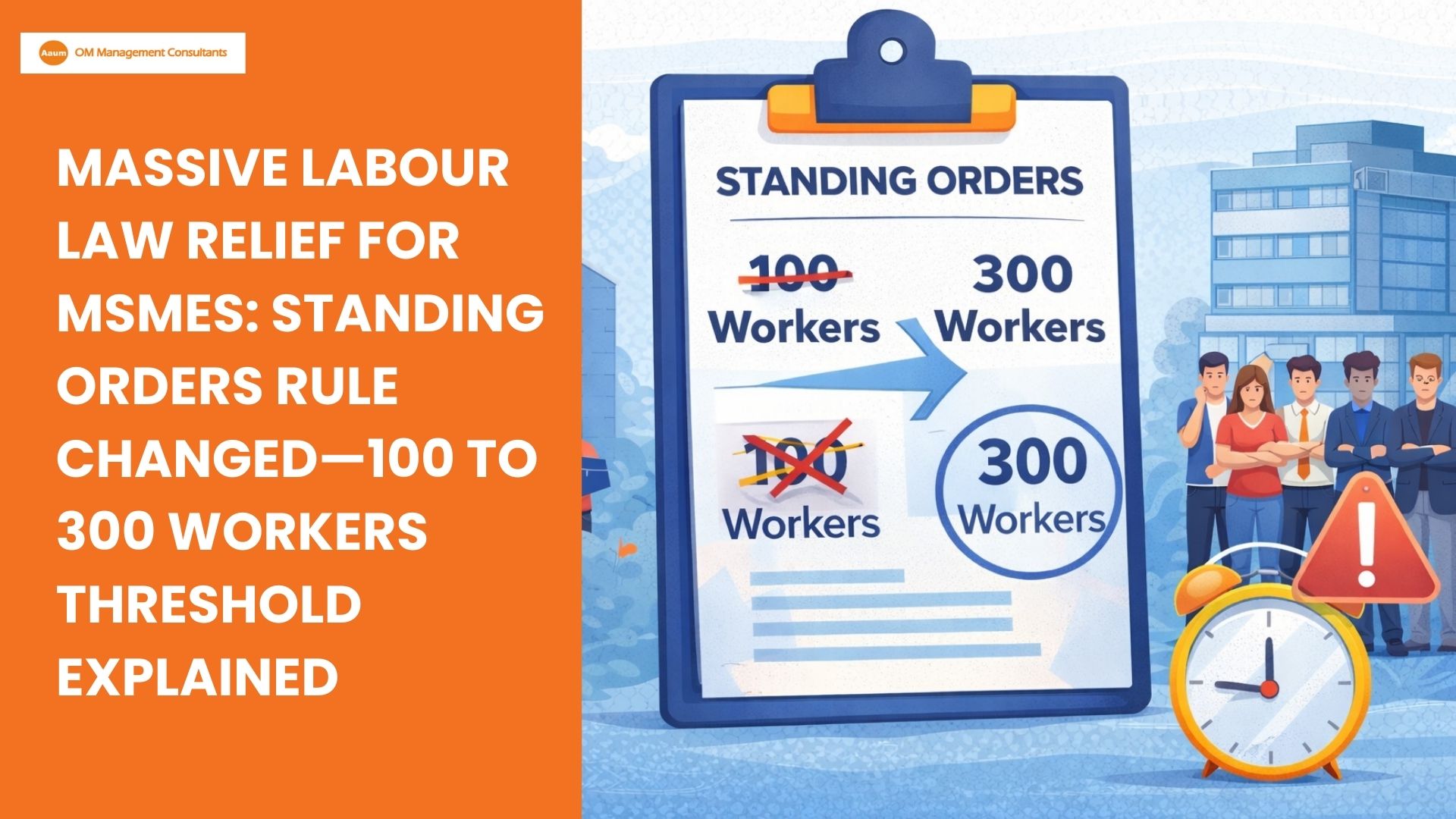
Massive Labour Law Relief for MSMEs: Standing Orders Rule Changed—100 to 300 Workers Threshold Explained

In a major pro-business reform under India’s new labour law framework, the government has officially increased the applicability threshold for Standing Orders from 100 workers to 300 workers under the Industrial Relations Code, 2020 (IR Code). This change has come as a huge relief for MSMEs, startups, and mid-sized companies, drastically reducing compliance pressure that

Massive Labour Law Relief for MSMEs: Standing Orders Rule Changed—100 to 300 Workers Threshold Explained Read More »

Urgent Compliance Alert: 15 January Deadline for Labour Welfare Fund—One Missed Payment Can Trigger Penalties & Prosecution

Employers across India are on high alert as the Labour Welfare Fund (LWF) contribution deadline of 15 January approaches rapidly. Labour authorities have issued reminders that failure to deposit LWF on time can invite penalties, inspections, and even legal action, especially for establishments covered under state-specific labour welfare laws. What many employers still underestimate is

Urgent Compliance Alert: 15 January Deadline for Labour Welfare Fund—One Missed Payment Can Trigger Penalties & Prosecution Read More »

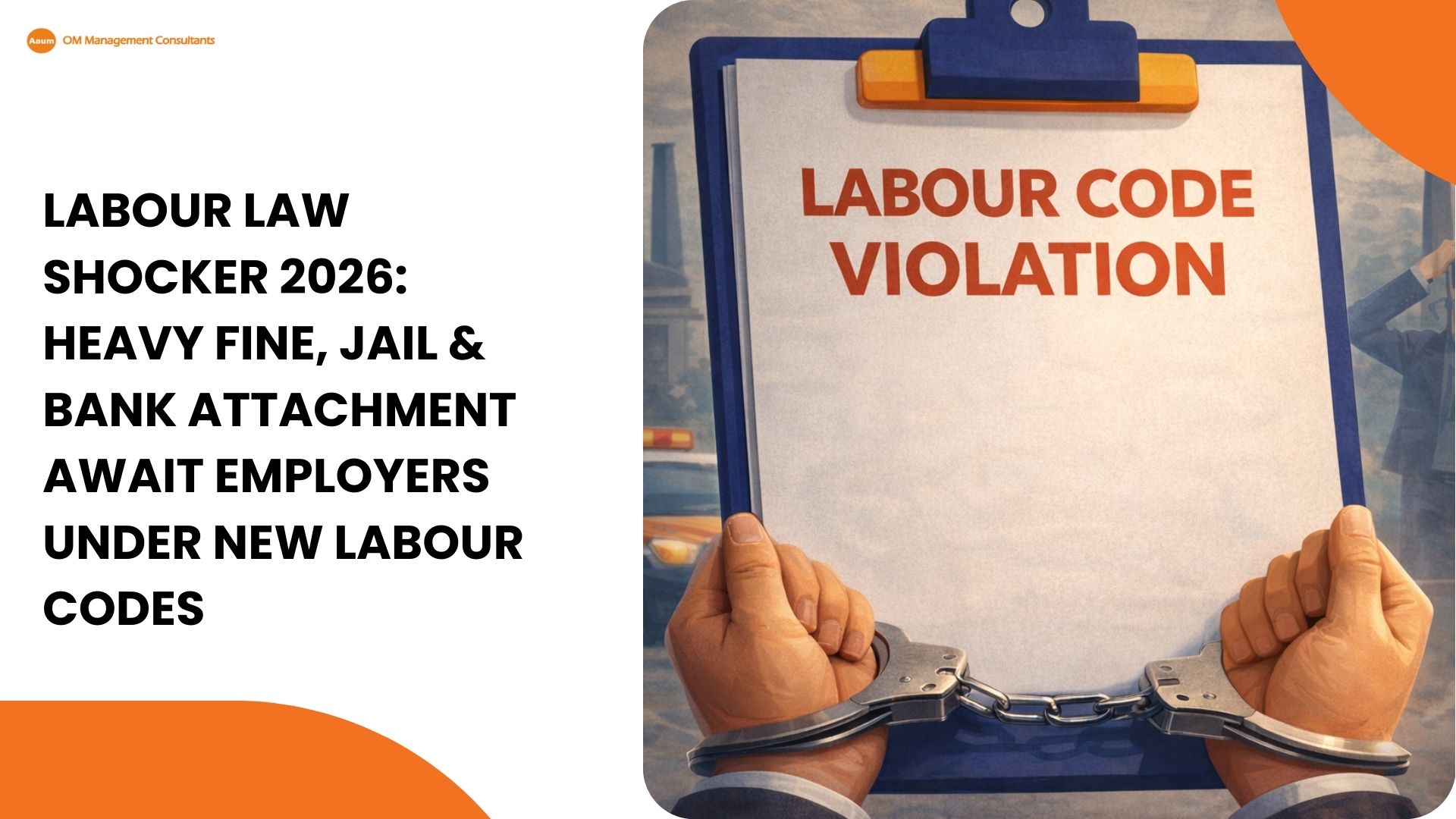
Labour Law Shocker 2026: Heavy Fine, Jail & Bank Attachment Await Employers Under New Labour Codes

India’s labour law landscape has changed dramatically, and employers who ignore compliance now face serious criminal consequences. Under the Four New Labour Codes, violations can lead to heavy fines, imprisonment up to 3 years, bank account attachment, and even mandatory jail in PF-related defaults. What was once treated as a procedural lapse has now become

Labour Law Shocker 2026: Heavy Fine, Jail & Bank Attachment Await Employers Under New Labour Codes Read More »

Big EPFO Shocker 2026: Employees Can Now Withdraw 100% PF After Just 12 Months – Full Details Inside

In a major relief for crores of salaried employees across India, the Employees’ Provident Fund Organisation (EPFO) has rolled out new PF withdrawal rules for 2026, making it significantly easier for members to access their provident fund savings. Under the revised rules, employees who have completed just 12 months of service are now eligible to

Big EPFO Shocker 2026: Employees Can Now Withdraw 100% PF After Just 12 Months – Full Details Inside Read More »

Scroll to Top