Labour Law Compliance

Labour Code 2026: What Factory Owners Must Update Before It’s Too Late

For most factory owners, daily operations demand constant attention. Production targets, workforce management, supply chain coordination, and client commitments often take priority. Compliance, although important, is usually treated as a background function—something that needs to be managed but not constantly re-evaluated. However, the upcoming implementation of India’s labour codes is set to change that mindset […]

Labour Code 2026: What Factory Owners Must Update Before It’s Too Late Read More »

Migrant Workmen Compliance: How One Miss Can Lead to Legal Trouble

In many factories and industrial units, a significant portion of the workforce comes from different states. These workers play a critical role in maintaining productivity, meeting deadlines, and supporting business growth. At first glance, everything seems normal. Workers are hired, assigned tasks, and paid wages. Operations continue smoothly, and there are no visible issues. But

Migrant Workmen Compliance: How One Miss Can Lead to Legal Trouble Read More »

Contract Labour Compliance in India: Why Principal Employers Face Risk Even with Vendors

Contract labour is widely used across manufacturing, warehousing, construction, logistics, and service industries in India. While engaging contractors offers flexibility, it also introduces significant compliance risk. In recent years, labour authorities have increasingly held principal employers accountable for violations committed by contractors.In 2026, contract labour compliance is under sharper scrutiny due to digitized inspections, wage

Contract Labour Compliance in India: Why Principal Employers Face Risk Even with Vendors Read More »

Labour Law Inspections Are Increasing in 2026: Are Your Records Inspection-Ready?

Labour law inspections across Maharashtra are becoming more frequent, structured, and data-driven in 2026. With digitization of records, inter-department data sharing, and stricter enforcement in MIDCs and commercial establishments, businesses can no longer rely on reactive compliance. Today, inspection readiness is not about last-minute paperwork—it is about maintaining consistent, legally aligned records at all times.Many

Labour Law Inspections Are Increasing in 2026: Are Your Records Inspection-Ready? Read More »

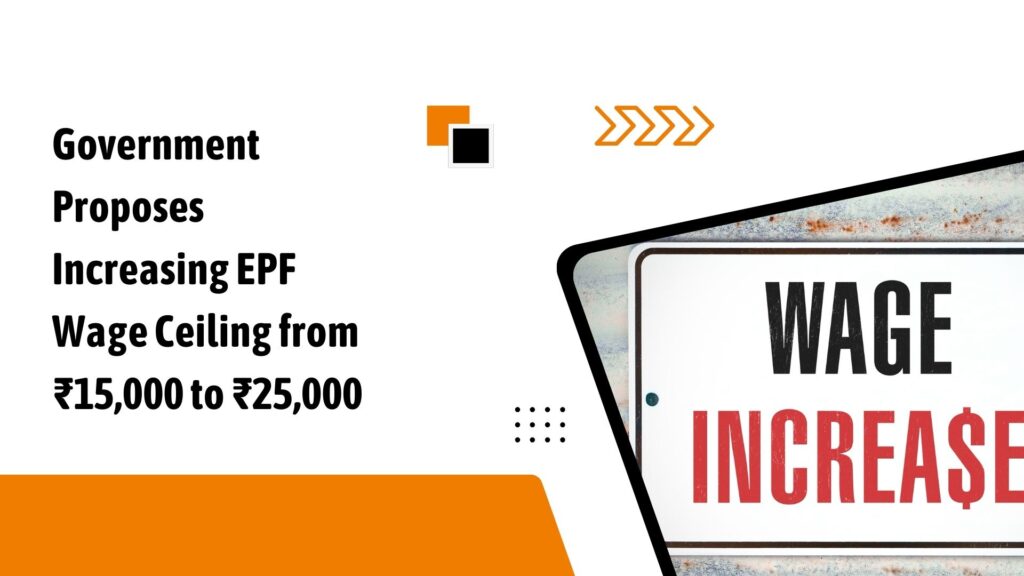
Government Proposes Increasing EPF Wage Ceiling from ₹15,000 to ₹25,000

New Delhi:The Ministry of Labour and Employment has proposed increasing the EPF wage ceiling from ₹15,000 to ₹25,000 per month.Once implemented: More employees will be covered Contributions will increase Pension and retirement savings will improve Employees earning up to ₹25,000 (Basic + DA) will be mandatorily covered under EPF. This proposed revision reflects the changing

Government Proposes Increasing EPF Wage Ceiling from ₹15,000 to ₹25,000 Read More »

Overtime Can Only Be Done With Employee Consent and Must Be Paid at Double Rate

New Delhi:Overtime work in India has now been made fully voluntary and financially protected under the new labour law.Any extra work beyond regular hours: Requires the employee’s consent Must be paid at double the normal wage This protection now applies to office employees, service workers, and all categories of staff — not just factory workers.The

Overtime Can Only Be Done With Employee Consent and Must Be Paid at Double Rate Read More »

Gig Workers and Contract Staff Brought Under India’s Social Security System

New Delhi:India has taken a major step towards workforce inclusion by extending social security coverage to gig workers, platform workers, freelancers and contract employees.These workers will now be eligible for: Insurance Medical benefits Pension schemes Accident coverage This change benefits millions working in food delivery, ride-hailing, logistics, freelancing and digital platforms.

Gig Workers and Contract Staff Brought Under India’s Social Security System Read More »

Flexible Working Hours and 4-Day Workweek Legally Permitted Under New Labour Law

New Delhi:India’s new labour framework introduces flexibility in how employees can work their weekly hours, allowing businesses to implement four-day workweeks and other flexible schedules.Under the new rules, employees may work: 4 days × 12 hours 5 days × about 9.5 hours 6 days × 8 hours As long as the total does not exceed

Flexible Working Hours and 4-Day Workweek Legally Permitted Under New Labour Law Read More »

Employers Must Settle Full & Final Dues Within 2 Working Days After Exit

New Delhi:One of the most significant worker-friendly reforms under the new labour regime is the introduction of a strict timeline for Full and Final (FnF) settlements.Companies are now legally required to clear all dues within two working days of an employee’s last working day. This includes: Salary Leave encashment Bonus Incentives Gratuity Any other pending

Employers Must Settle Full & Final Dues Within 2 Working Days After Exit Read More »

Scroll to Top