Labour Law Compliance

Standing Orders Under the New Labour Codes: What Employers Need to Know

The introduction of the Industrial Relations Code, 2020 marks a significant shift in India’s labour law framework, particularly with respect to Standing Orders. Standing Orders are written rules that define the terms of employment and regulate conditions of service such as classification of workers, working hours, attendance, leave, misconduct, disciplinary procedures, and termination. These rules […]

Standing Orders Under the New Labour Codes: What Employers Need to Know Read More »
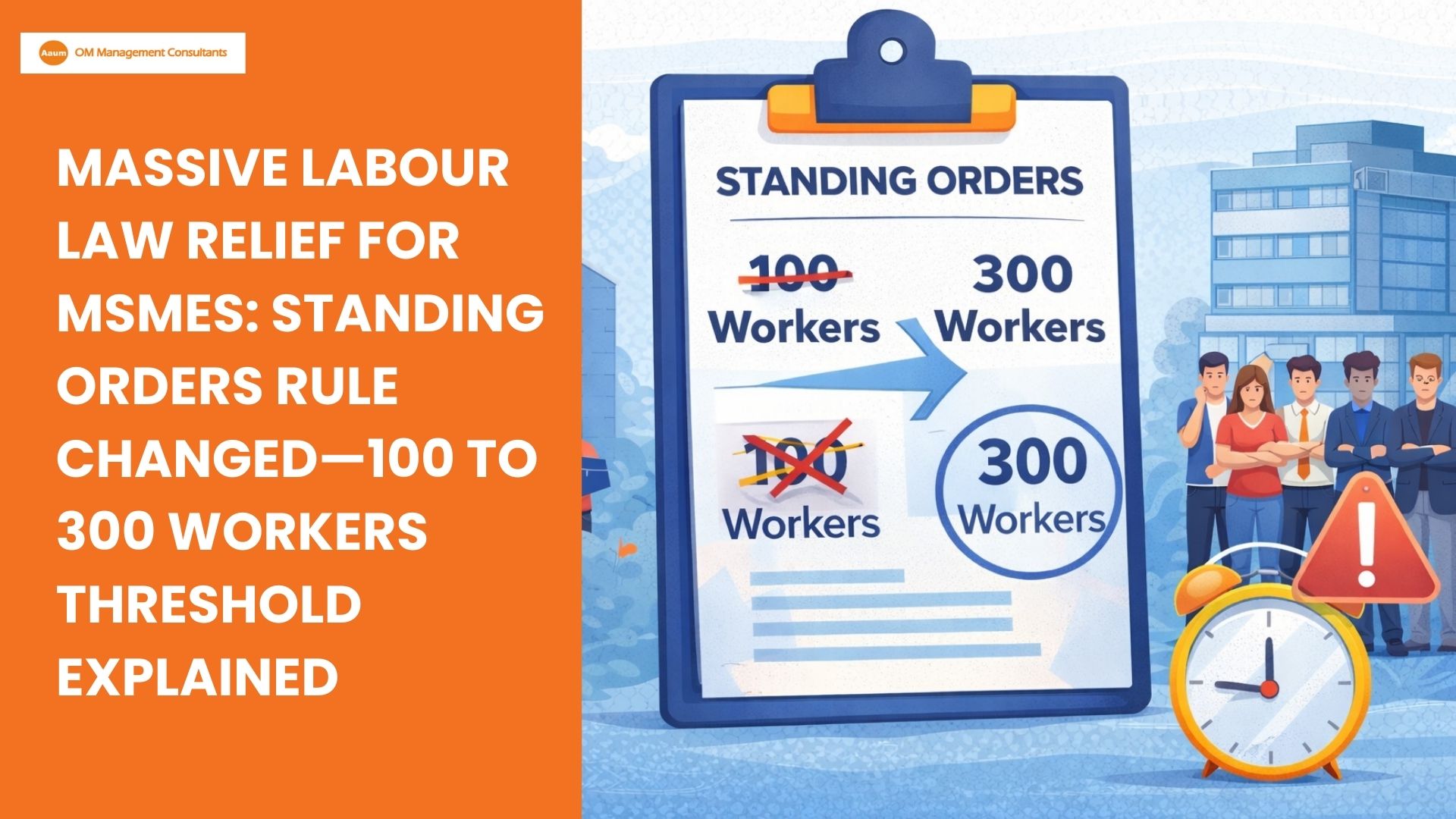
Massive Labour Law Relief for MSMEs: Standing Orders Rule Changed—100 to 300 Workers Threshold Explained

In a major pro-business reform under India’s new labour law framework, the government has officially increased the applicability threshold for Standing Orders from 100 workers to 300 workers under the Industrial Relations Code, 2020 (IR Code). This change has come as a huge relief for MSMEs, startups, and mid-sized companies, drastically reducing compliance pressure that

Massive Labour Law Relief for MSMEs: Standing Orders Rule Changed—100 to 300 Workers Threshold Explained Read More »

Urgent Compliance Alert: 15 January Deadline for Labour Welfare Fund—One Missed Payment Can Trigger Penalties & Prosecution

Employers across India are on high alert as the Labour Welfare Fund (LWF) contribution deadline of 15 January approaches rapidly. Labour authorities have issued reminders that failure to deposit LWF on time can invite penalties, inspections, and even legal action, especially for establishments covered under state-specific labour welfare laws. What many employers still underestimate is

Urgent Compliance Alert: 15 January Deadline for Labour Welfare Fund—One Missed Payment Can Trigger Penalties & Prosecution Read More »

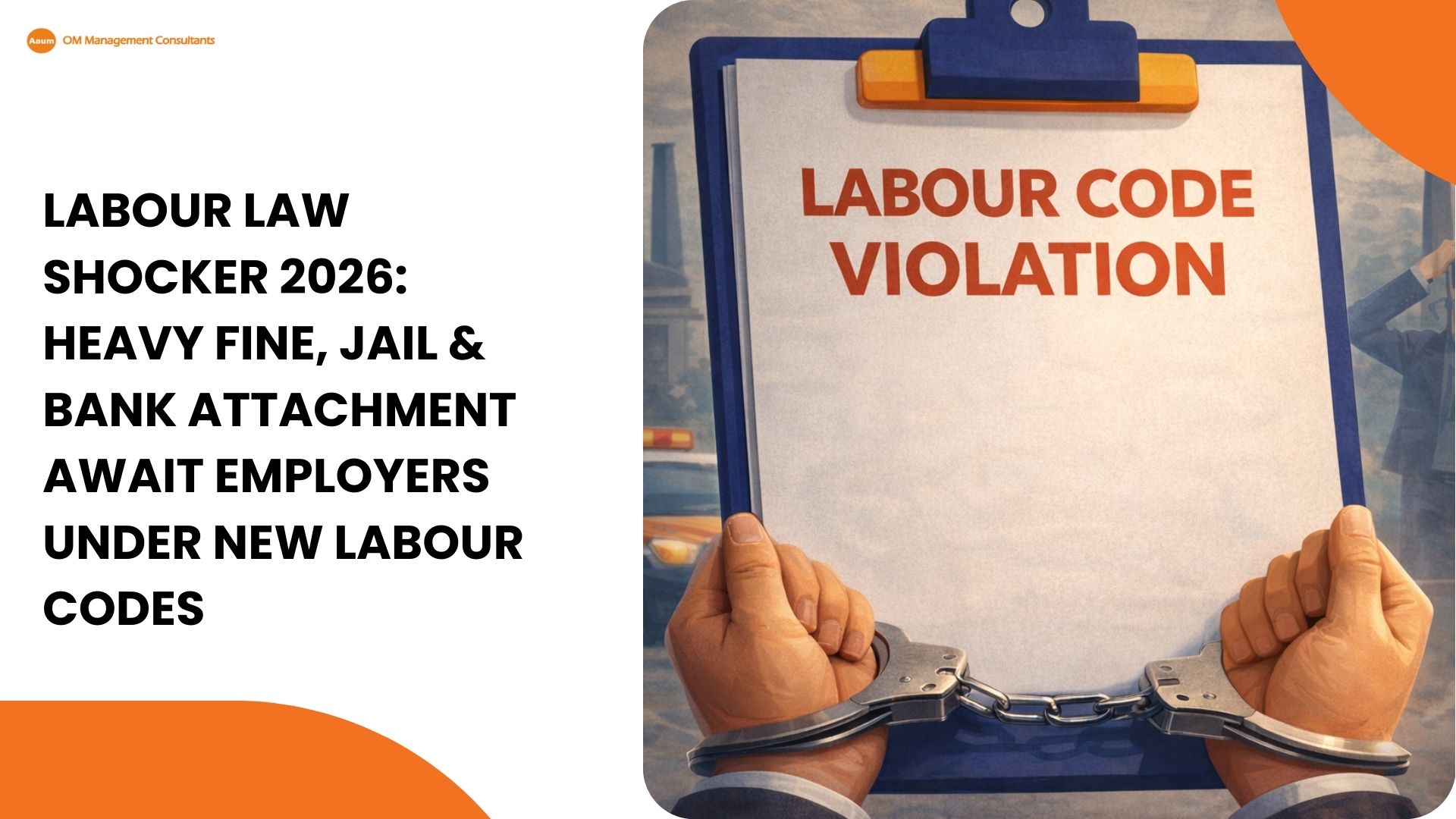
Labour Law Shocker 2026: Heavy Fine, Jail & Bank Attachment Await Employers Under New Labour Codes

India’s labour law landscape has changed dramatically, and employers who ignore compliance now face serious criminal consequences. Under the Four New Labour Codes, violations can lead to heavy fines, imprisonment up to 3 years, bank account attachment, and even mandatory jail in PF-related defaults. What was once treated as a procedural lapse has now become

Labour Law Shocker 2026: Heavy Fine, Jail & Bank Attachment Await Employers Under New Labour Codes Read More »

Minimum Wage Now Mandatory for All Workers, Including Contract and Gig Staff

New Delhi:In a major reform aimed at strengthening worker protection, the government has made minimum wages mandatory for all workers, regardless of their job type, industry, or employment arrangement. Earlier, minimum wage laws applied only to specific “scheduled employments,” leaving a large section of India’s workforce outside legal wage protection. Under the new system, every

Minimum Wage Now Mandatory for All Workers, Including Contract and Gig Staff Read More »

Construction & Maintenance Workers

Minimum Wages for Construction & Maintenance Workers w.e.f. 1 October 2025 – Revised VDA Order: A Guide for Business Owners

In India’s evolving labour landscape, one update that demands every employer’s attention is the new minimum wage order effective 1 October 2025. This change directly impacts construction and maintenance workers under the revised Variable Dearness Allowance (VDA) system. For business owners, HR managers, and compliance professionals, this isn’t just another administrative update — it’s a

Minimum Wages for Construction & Maintenance Workers w.e.f. 1 October 2025 – Revised VDA Order: A Guide for Business Owners Read More »

Common Mistakes in Labour Registration Applications (And How to Avoid Them)

Common Mistakes in Labour Registration Applications (And How to Avoid Them)

Labour registration is a legal necessity for businesses operating in India, especially those employing workers in factories, establishments, or through contract staffing. While the process may seem straightforward, many employers and HR professionals make avoidable mistakes during labour registration applications—leading to delays, penalties, or even rejection. In this blog, we highlight the most common labour

Common Mistakes in Labour Registration Applications (And How to Avoid Them) Read More »

Understanding Contract Labour Compliance in India: Why It Matters for Your Business

As businesses scale and diversify, hiring contract labour becomes an effective way to manage workforce flexibility and cost-efficiency. However, with this comes the responsibility of ensuring compliance with the Contract Labour (Regulation and Abolition) Act, 1970. Non-compliance can attract legal action, financial penalties, and reputational damage. This blog offers a complete guide to contract labour

Understanding Contract Labour Compliance in India: Why It Matters for Your Business Read More »

Why Compliance Is Important

Introduction Have you ever wondered why companies go to great lengths to follow certain rules and regulations? That’s what compliance is all about! Compliance ensures that businesses operate legally, ethically, and efficiently. Whether it’s about following financial regulations, data security laws, or workplace safety standards, compliance is essential for business success. The Role of Compliance

Why Compliance Is Important Read More »

Labour Law

Labour Law (RC & Compliances): A Comprehensive Guide for Everyone

Understanding labour laws and compliances might seem intimidating, but it doesn’t have to be. Think of it as a set of rules designed to create a fair workplace where everyone knows their rights and responsibilities. Whether you’re an employer, employee, or someone curious about the topic, this guide will help you navigate the essentials of

Labour Law (RC & Compliances): A Comprehensive Guide for Everyone Read More »

Scroll to Top